

What is DNA and why is it important in Dogs
- Identifying genetic disorders: DNA sequencing can help identify genetic mutations that may cause diseases like cancer, cystic fibrosis, and heart disease.
- Tracking the spread of disease: DNA sequencing can help public health officials understand how disease-causing microorganisms spread through populations.
- Identifying crime suspects: DNA sequencing can help identify crime suspects and victims.
- Detecting environmental pollutants: DNA sequencing can help identify bacteria and other organisms that pollute air, water, soil, and food.
- Studying evolution: DNA sequencing can help study how populations have evolved and migrated.
- Determining pedigree: DNA sequencing can help determine pedigree for Dogs and other livestock and seed.
Keeping the gene pool stable – breeding carriers
The only way to be sure of your dog’s genetic heritage is DNA testing. Responsible breeders are aware of the importance of such tests and get their dogs tested in order to maintain or improve the quality of their dogs.
On the other hand, when the results show that their dog is a carrier for certain autosomal recessive disorder, owners often appear confused or disappointed.
Considering centuries of inbreeding among pure breed dogs, the appearance of carriers is not unusual. Additionally, some breeders appear discouraged from using their carrier dogs in the breeding program. Although the dog carries one copy of the causative mutation, the other copy of the allele is healthy, so the carrier dogs will be healthy dogs in relation to that specific recessively-inherited disorder.
When breeding carrier with a clear dog, there is 50% chance that puppies will be clear and 50% chance that puppies will be carriers, but ALL PUPPIES WILL BE HEALTHY. On the other hand, excluding the carrier completely from the breeding program will reduce the gene pool for this dog’s genetic material. Continuing this practice throughout years would cause dramatic shrinkage in the gene pool, which in turn, can lead to appearing of some new, until now unknown or extremely rare disorders.

- Genetic testing is the most accurate way to determine a dog’s status as clear, carrier, or affected.
- Breeders can test potential breeding dogs for disease-associated mutations.
- Breeding a carrier with a clear dog has a 50% chance of producing clear puppies and a 50% chance of producing carrier puppies.
- All puppies from this pairing will be healthy.
- Breeders can use a technique called “managing the carriers” to select and manage carriers.
- Including carriers can help preserve genetic diversity.
- Including carriers can help breeders capture desirable traits, such as temperament and breed type.
- Excluding carriers can help eliminate a mutation from a population.
- Excluding carriers can help reduce the risk of producing unwanted traits, genetic diseases, or defects.
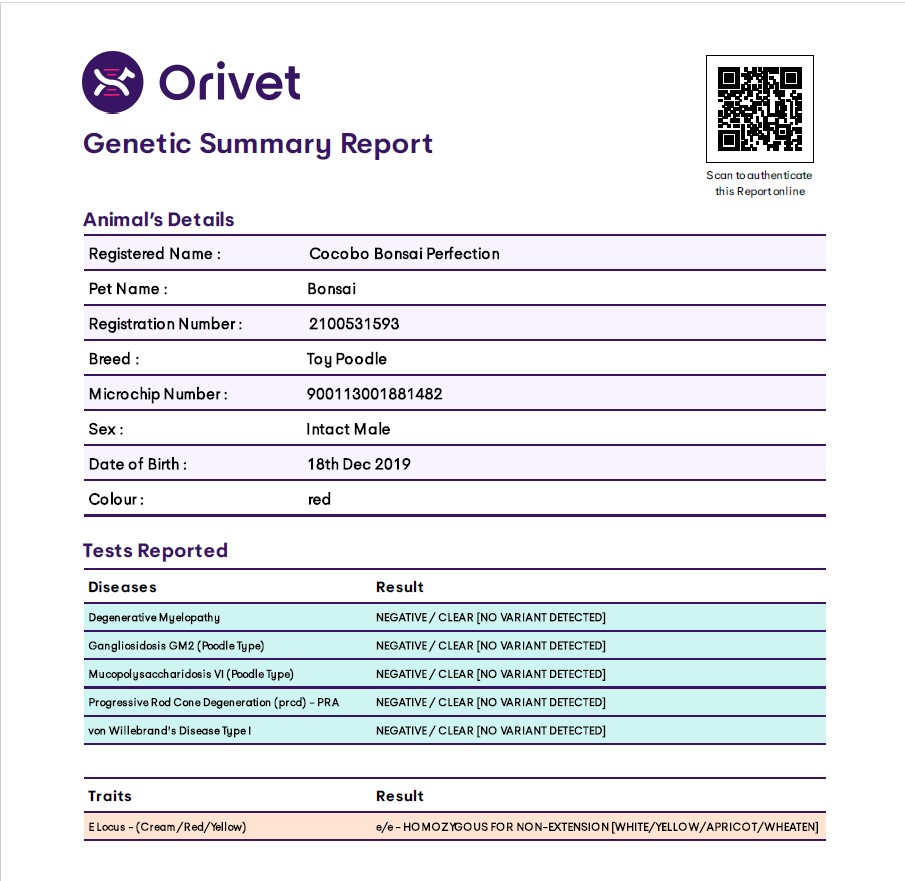
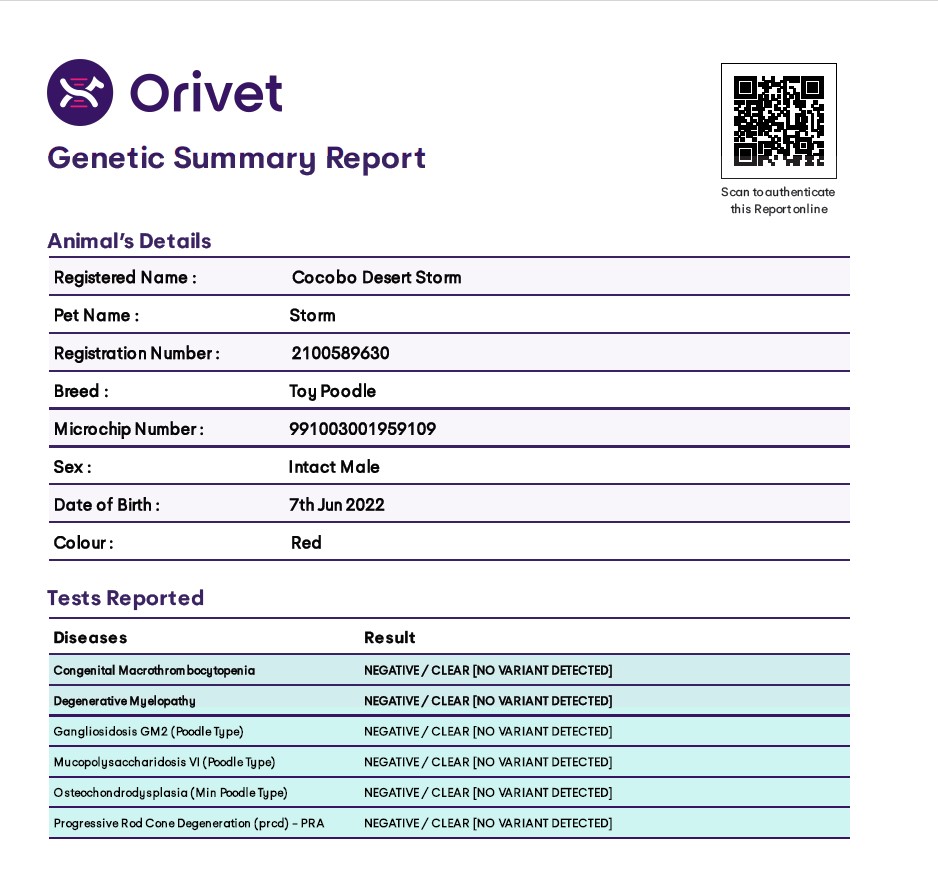
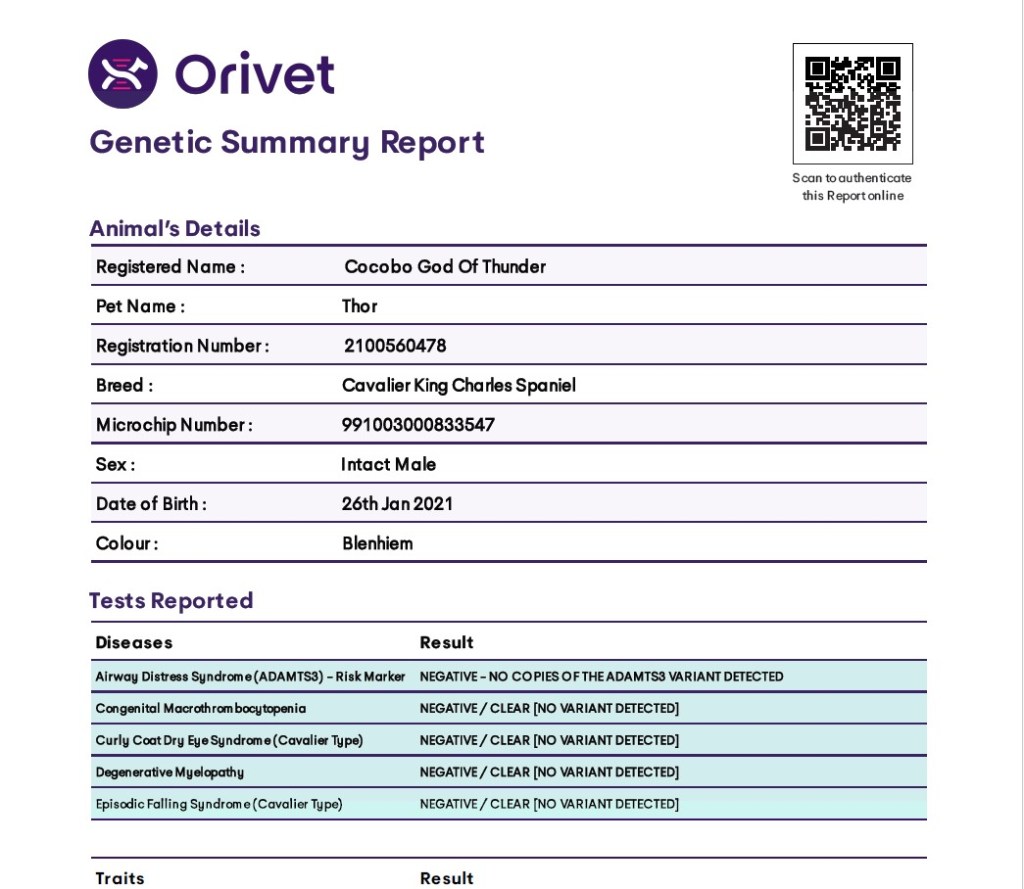
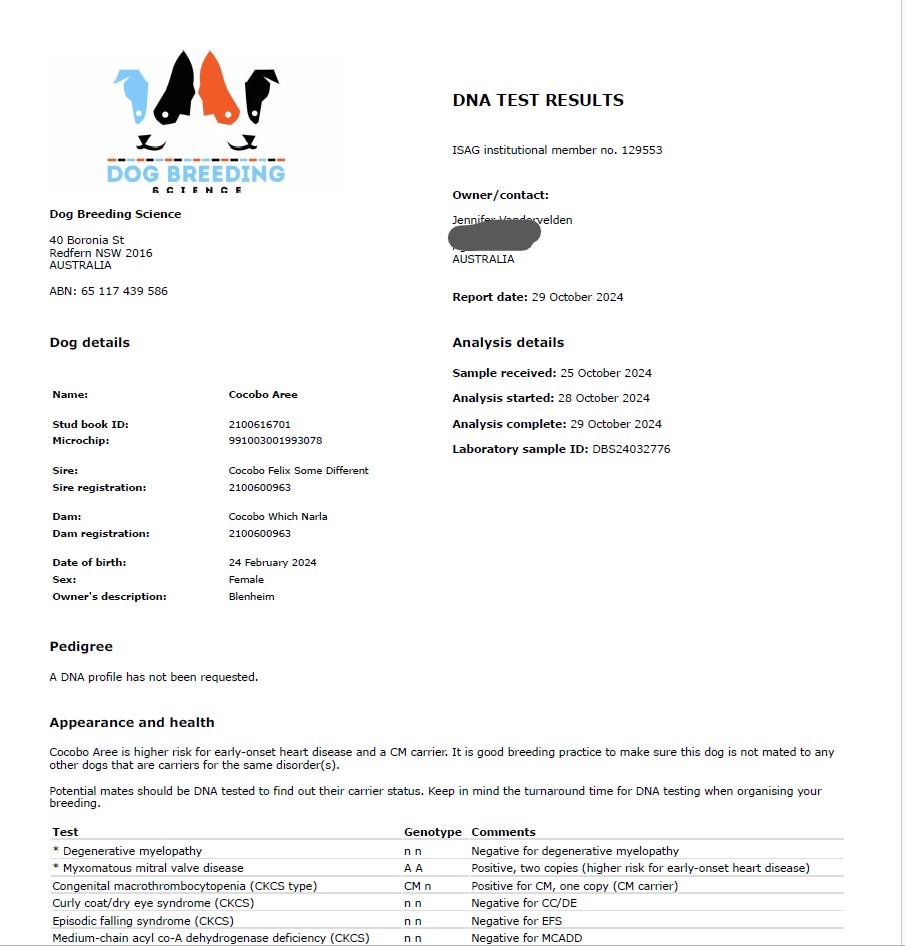
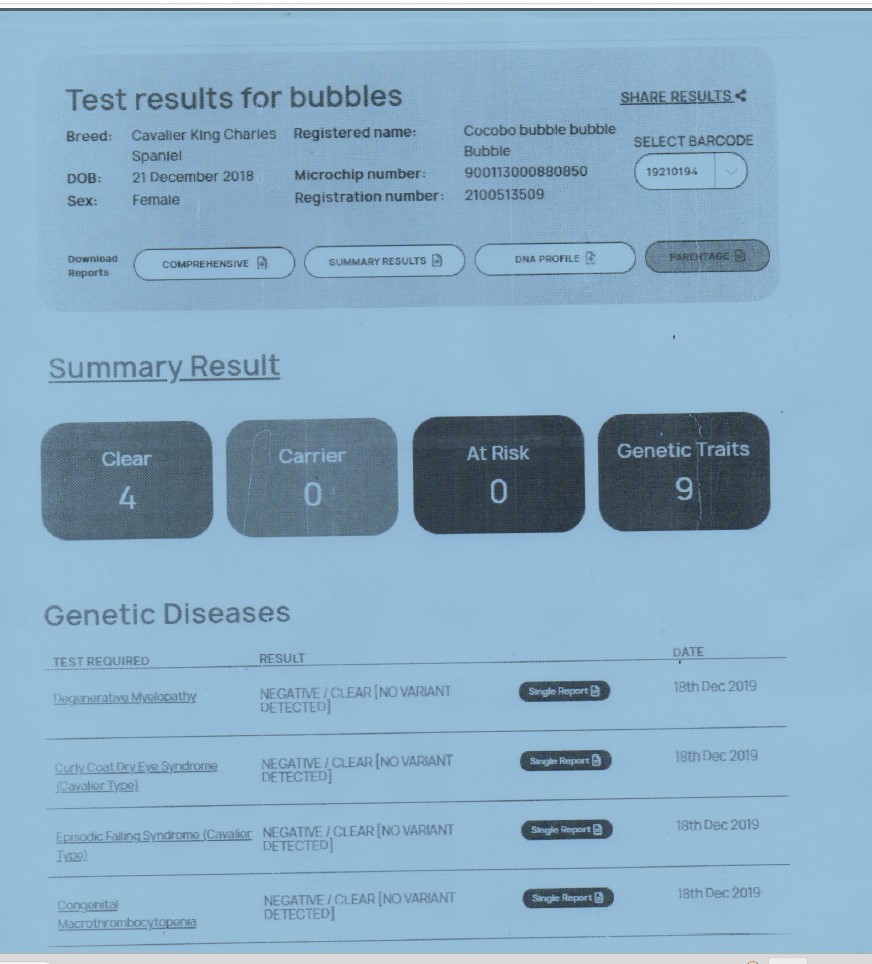
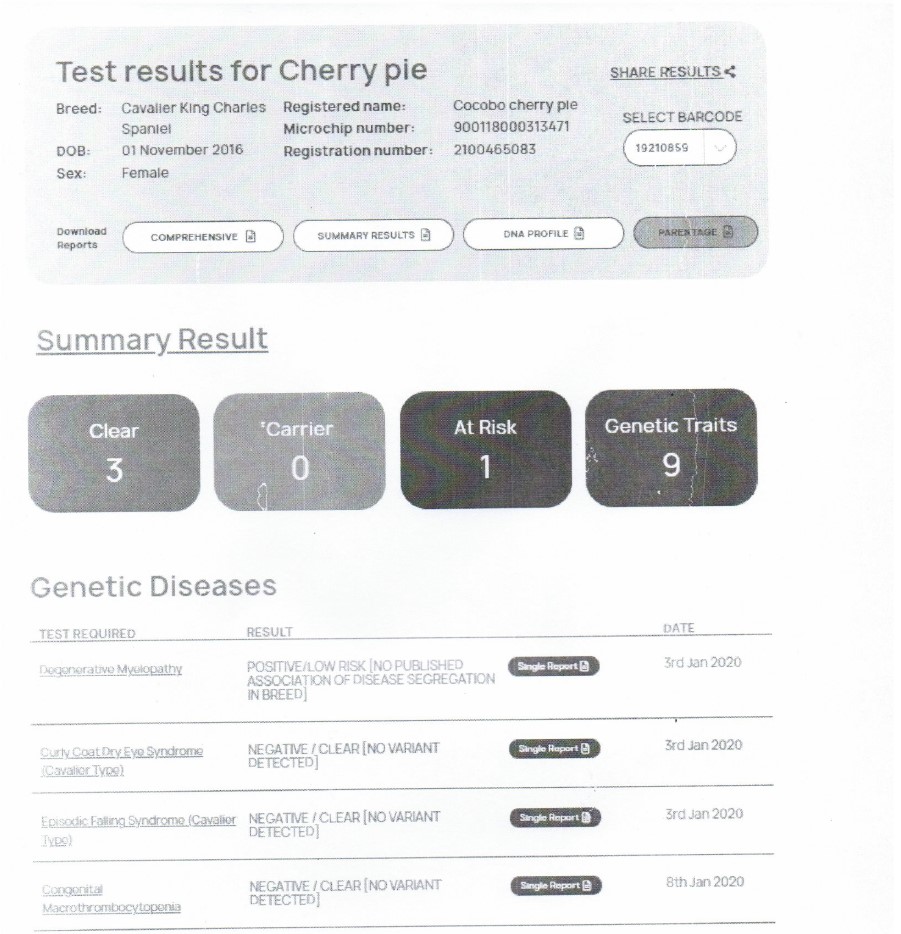
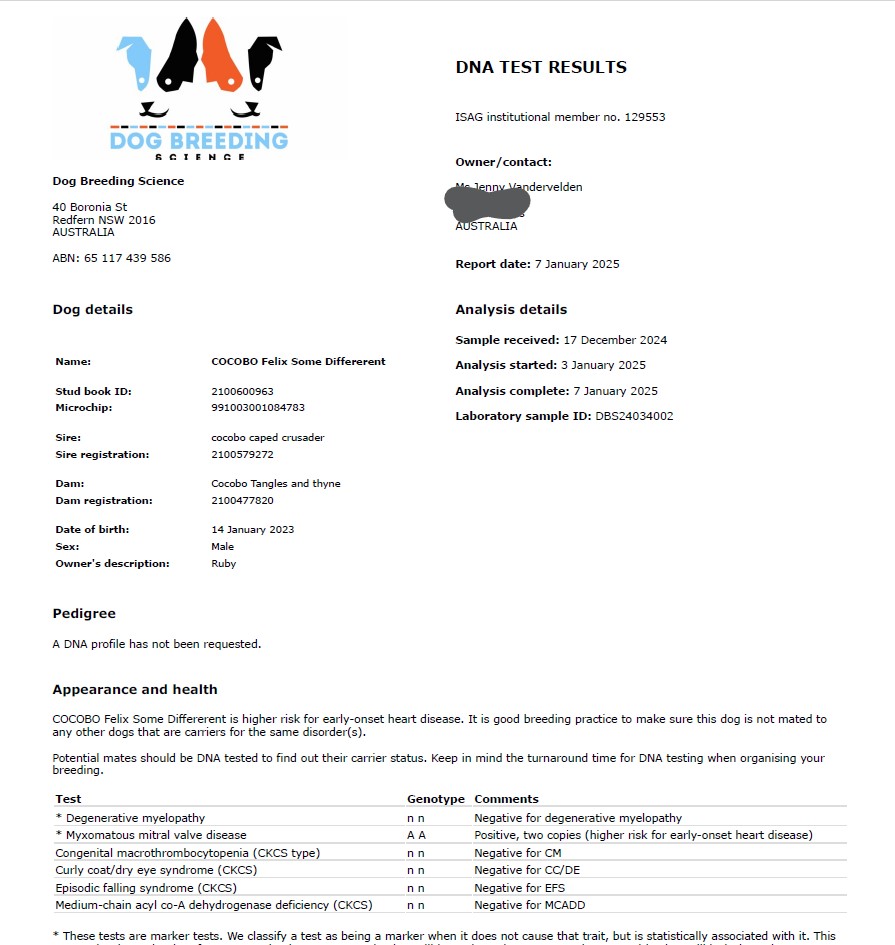
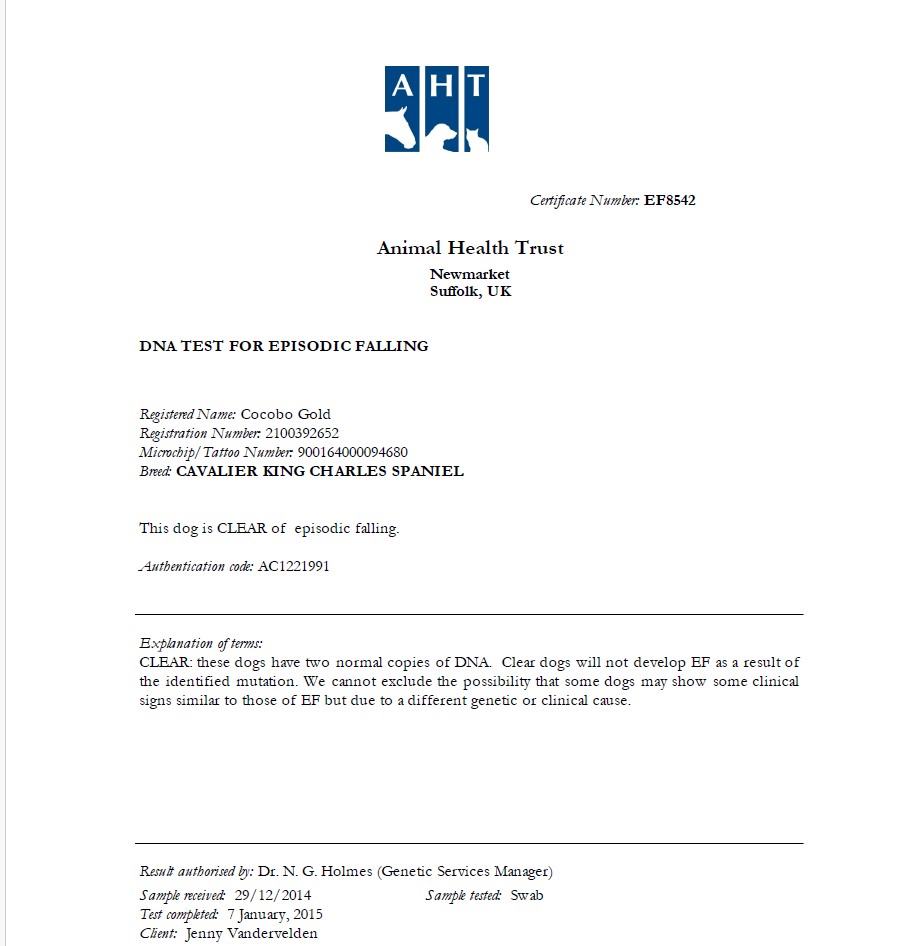
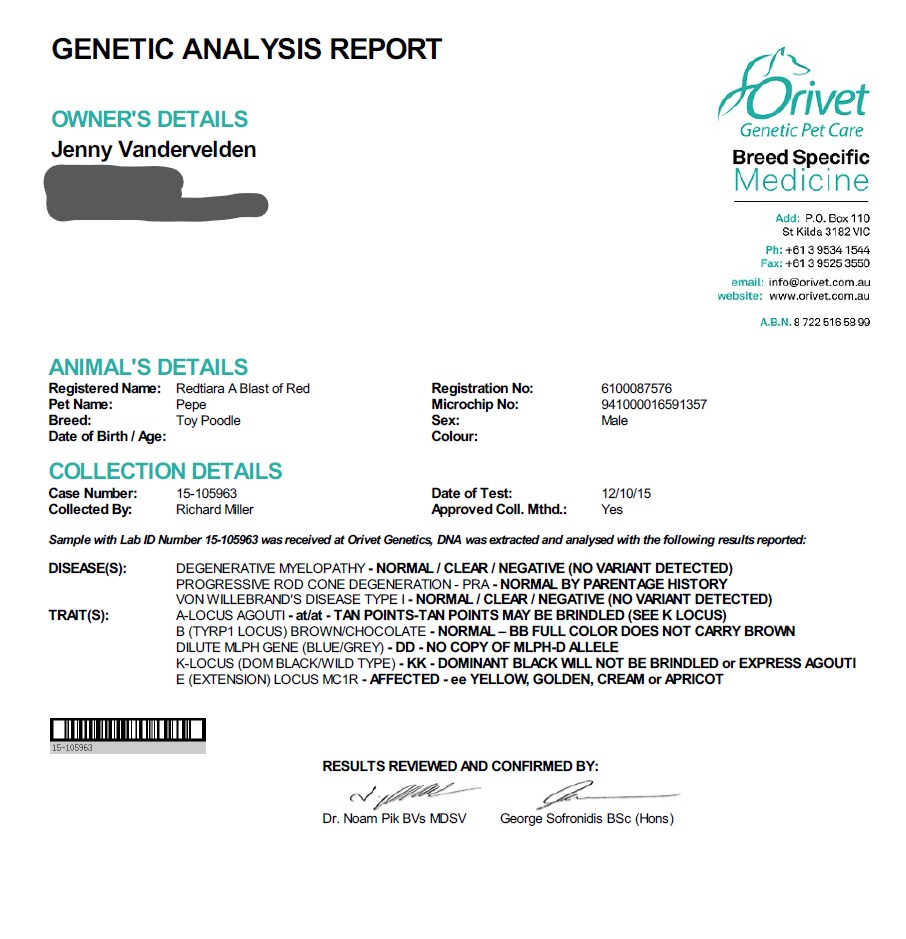
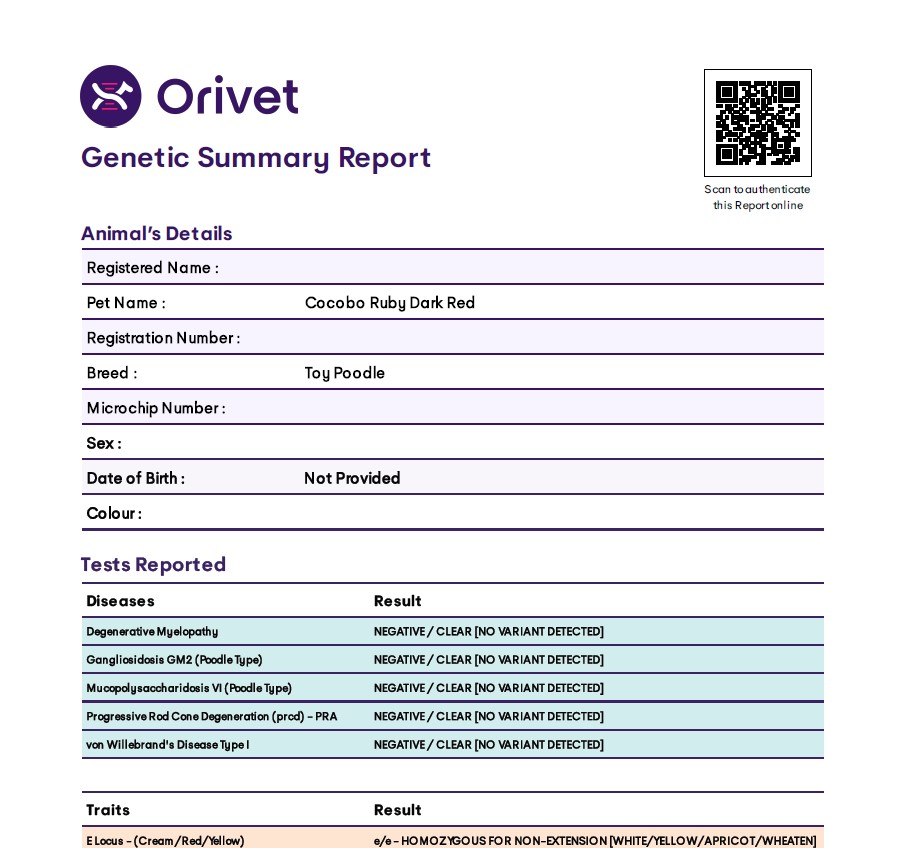
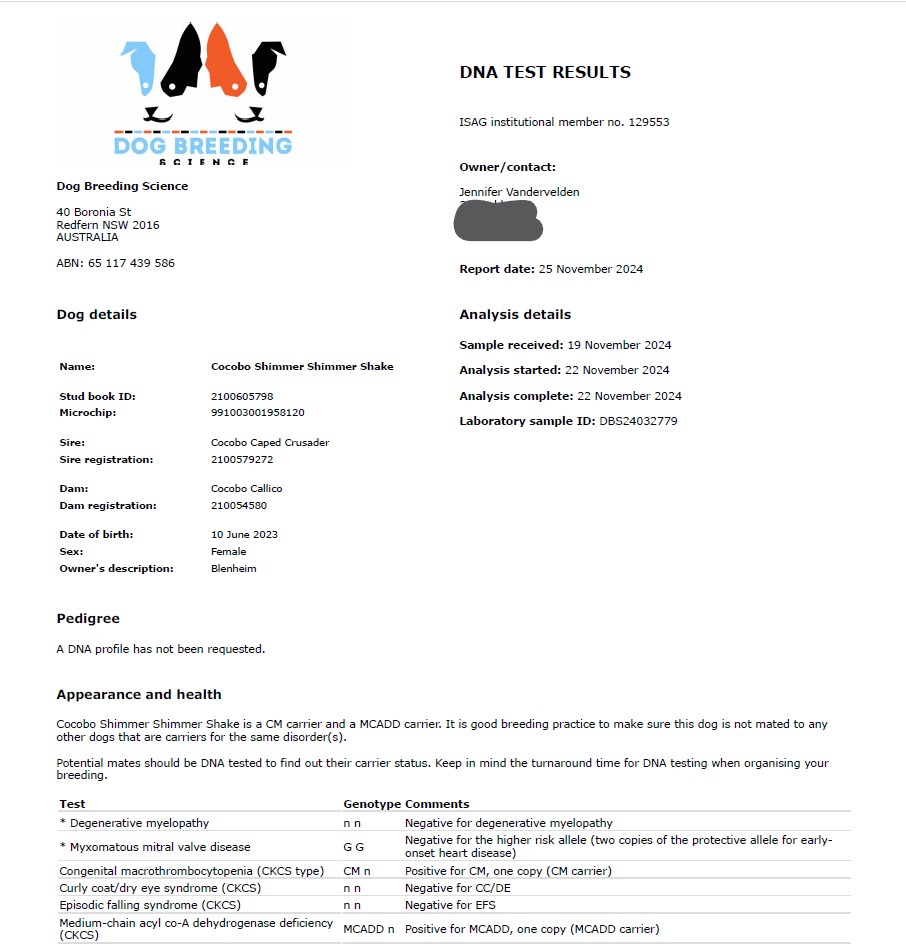
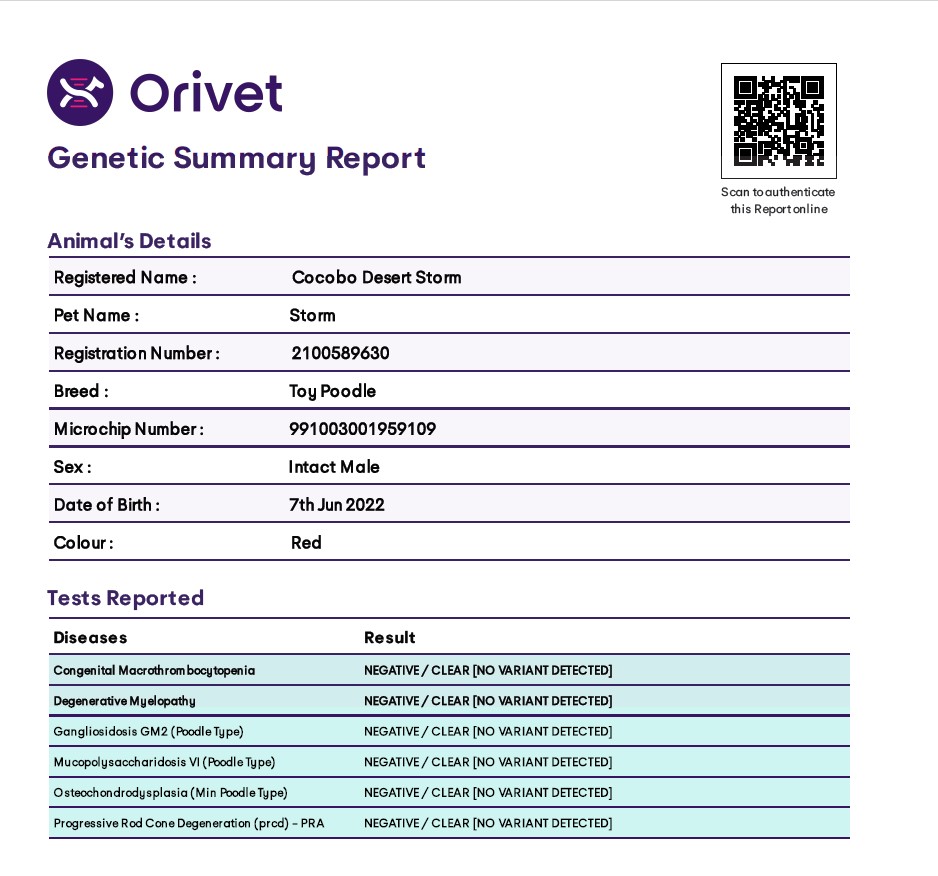
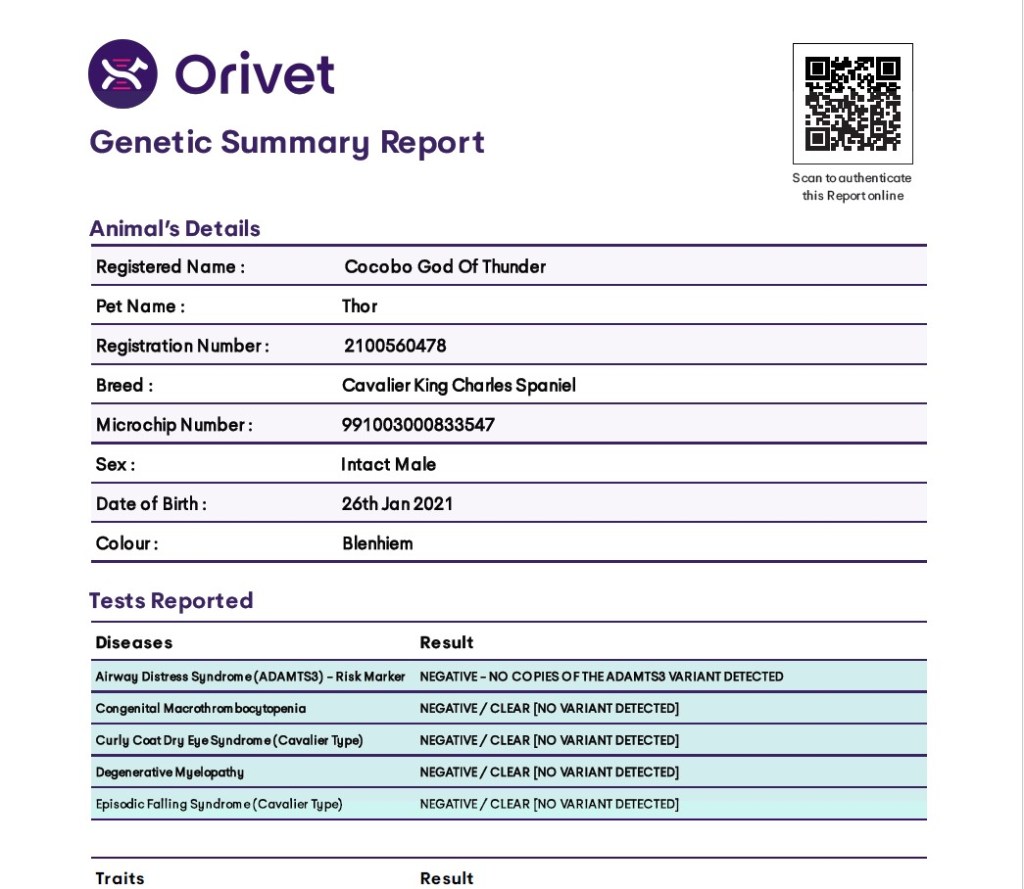
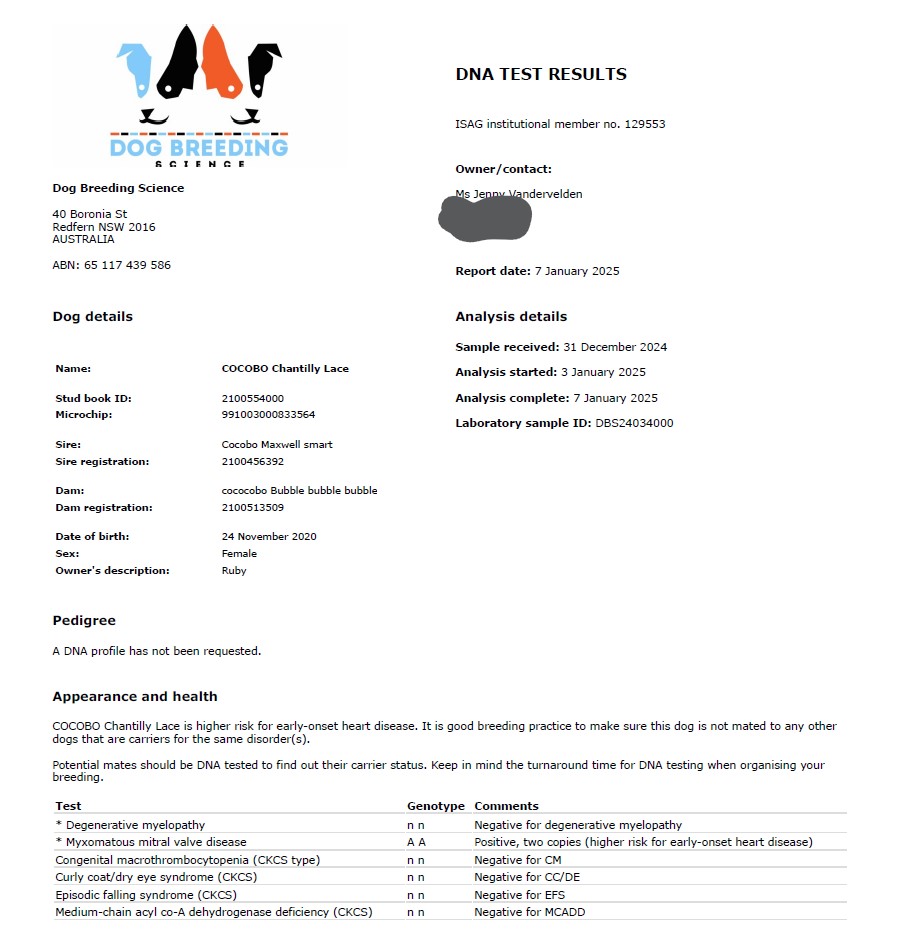
WE HAVE BEEN DOING DNA TESTING ON OUR DOGS FOR OVER 20 YEARS,
BELOW IS AN SMALL SAMPLE OF SOME OF OUR DOGS.
\



 Cocobo Paws 4 Life